 Drake Durflinger

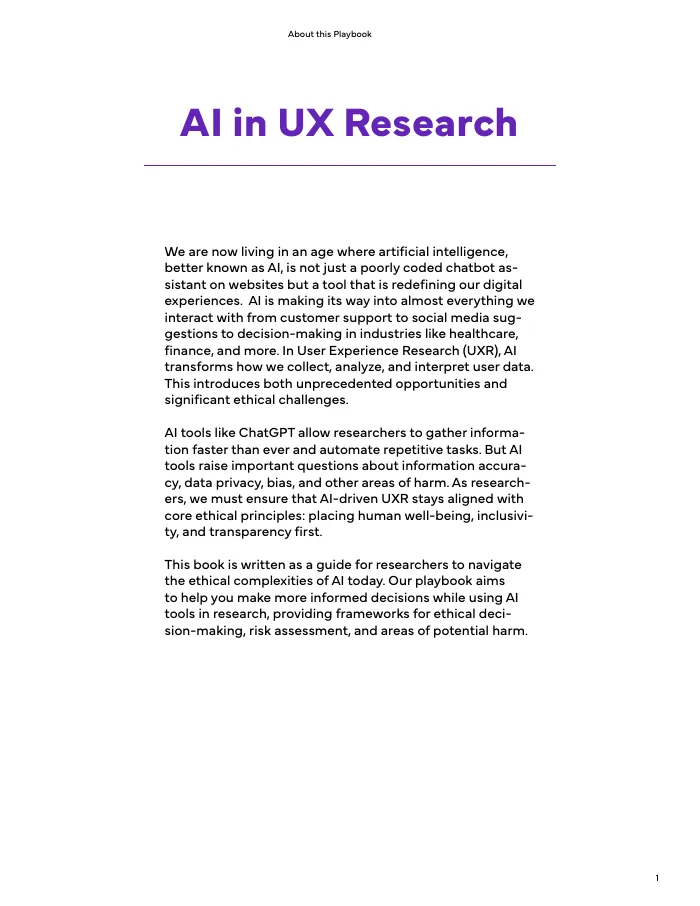
Research Ethics Playbook · Case study · 2025
Above all else, do no harm.
A 28-page playbook on running UX research ethically when AI is in the loop, ending in an ethics checklist and a consent form template that ask about AI from the first question.
01
What it is
“Ethical UX Research in the Age of Artificial Intelligence” is a 28-page playbook for UX researchers who use AI tools, written to “help you make more informed decisions while using AI tools in research.”
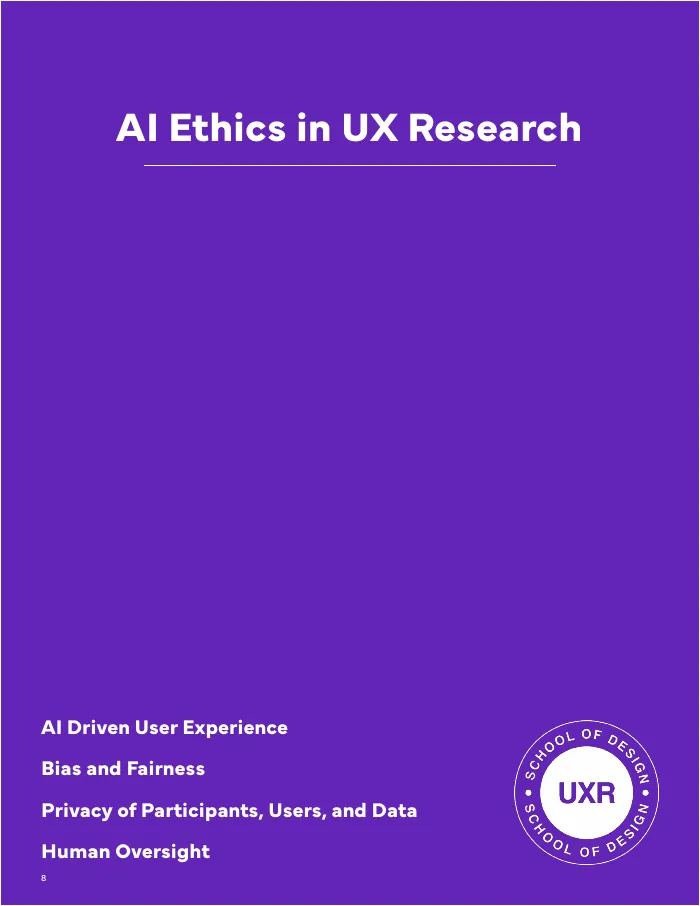
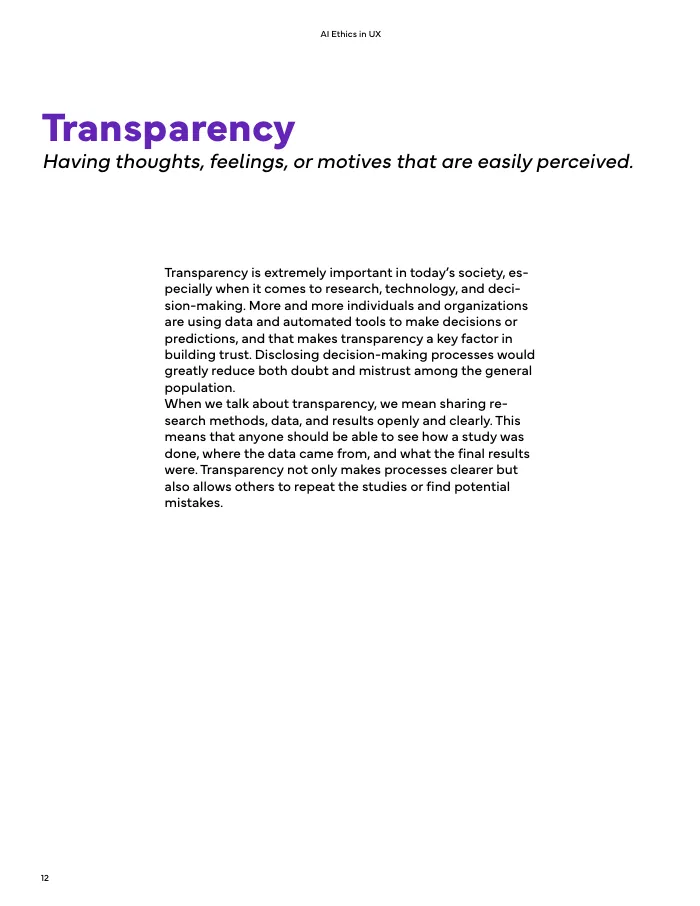
It has three chapters: an Ethics Overview (ethical foundations, informed consent, avoiding harm), AI Ethics in UX Research (AI-driven experiences, bias and fairness, transparency, privacy, human oversight), and a Toolkit (an ethics checklist and a consent form template).
02
My part
We were a team of three. I co-wrote the playbook and designed the book itself, all 28 pages, then made what presented it: a 74-second video, the poster and the mockups.
03
What we learned
-
The framework · basics, then AI, then tools
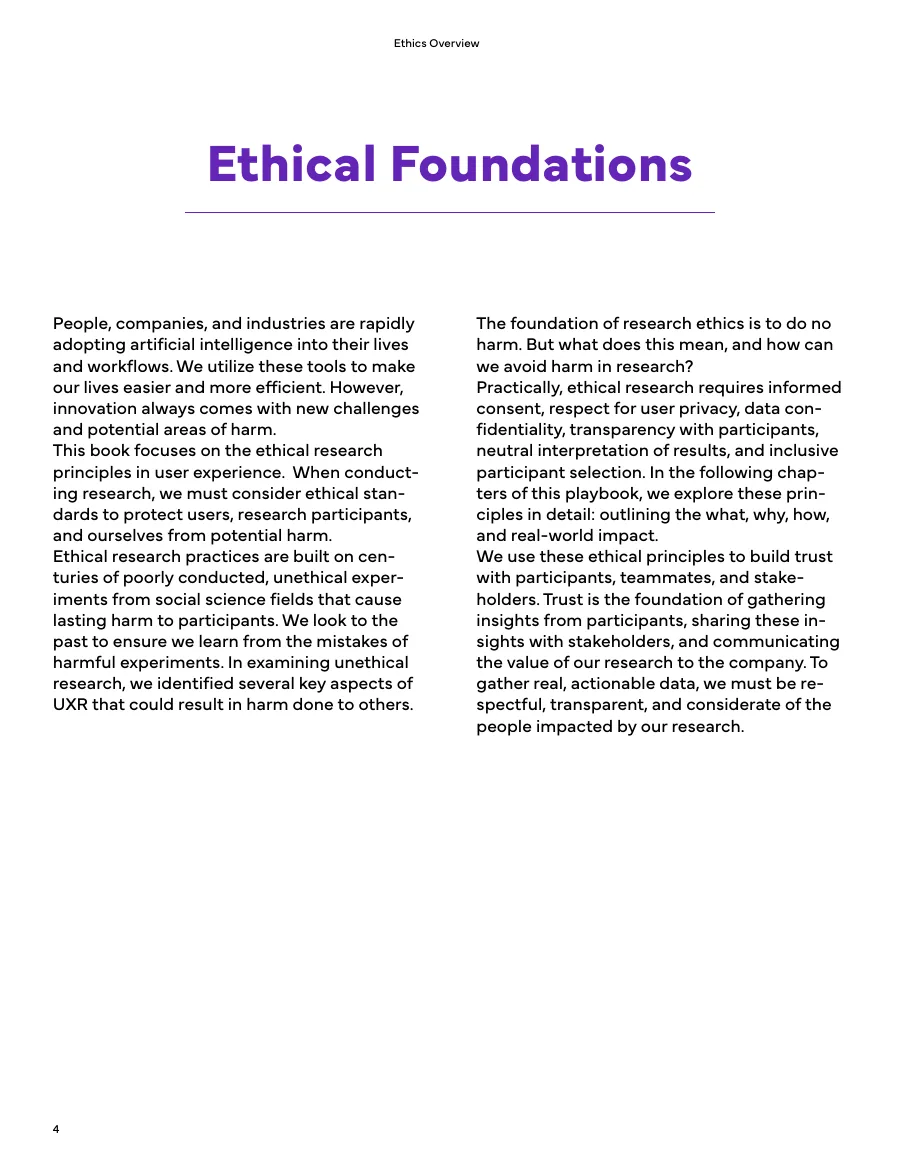
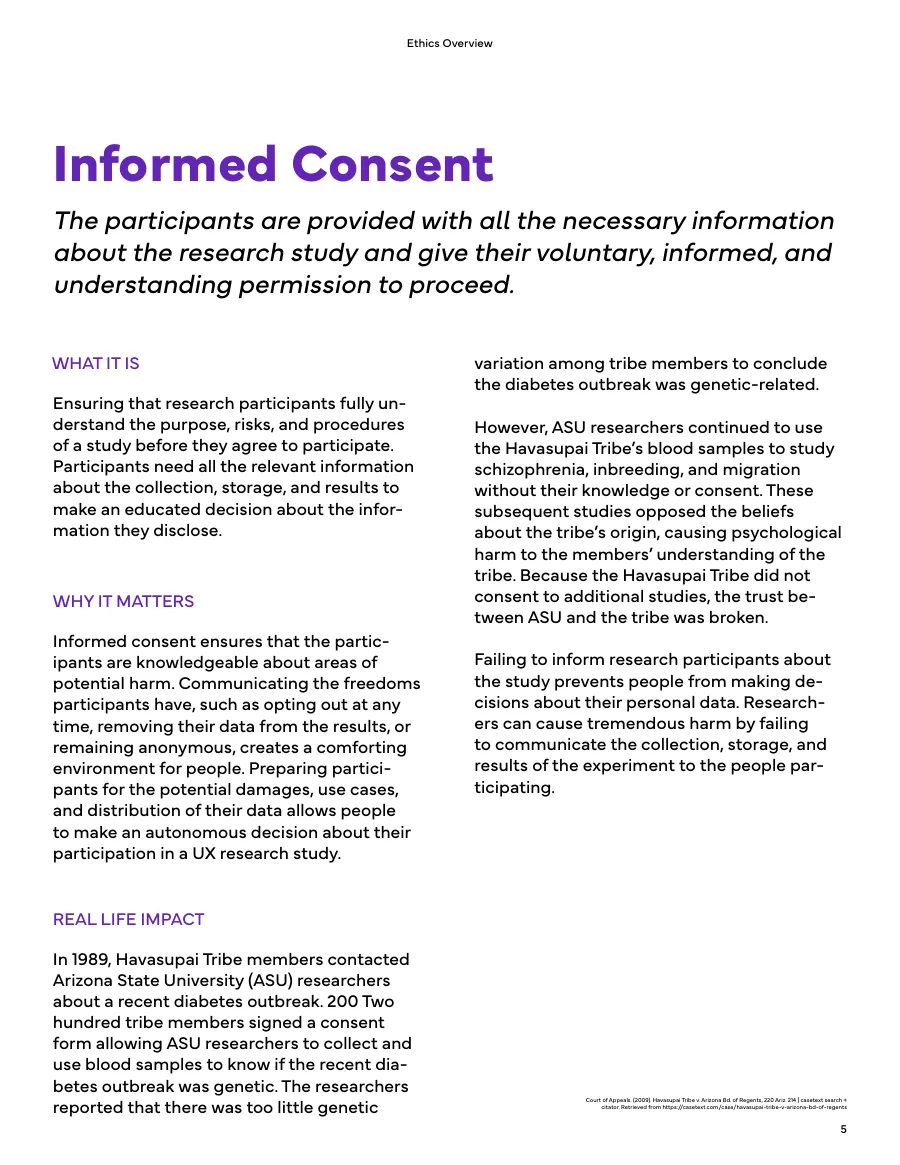
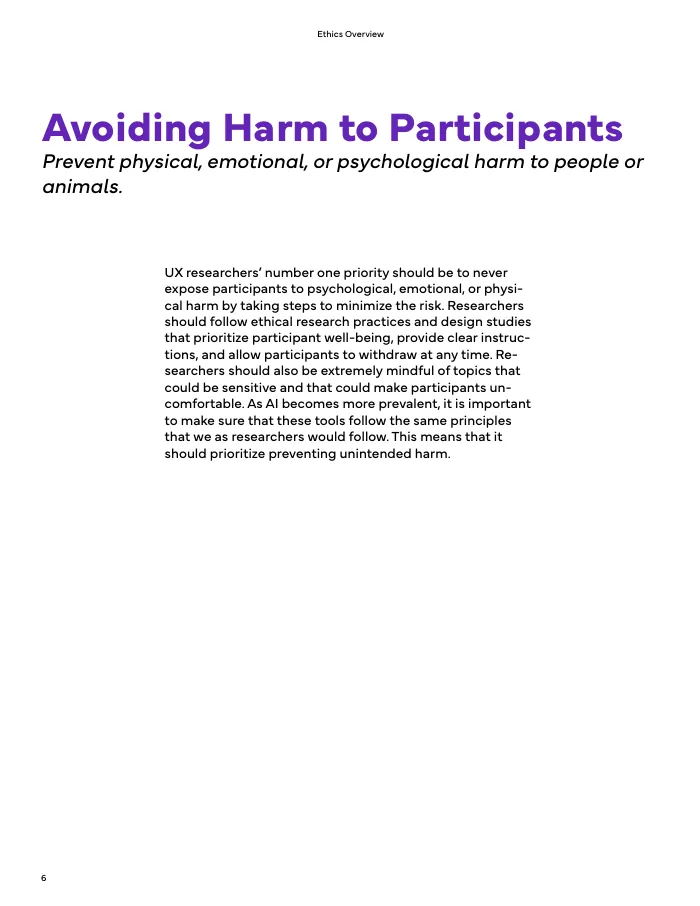
The book starts with rules older than AI, informed consent and avoiding harm, and says AI tools must “follow the same principles that we as researchers would follow.”
Then it shows the five places where AI raises the stakes, and ends with two tools a team can use.
-
Every principle · what it is, why it matters, real life
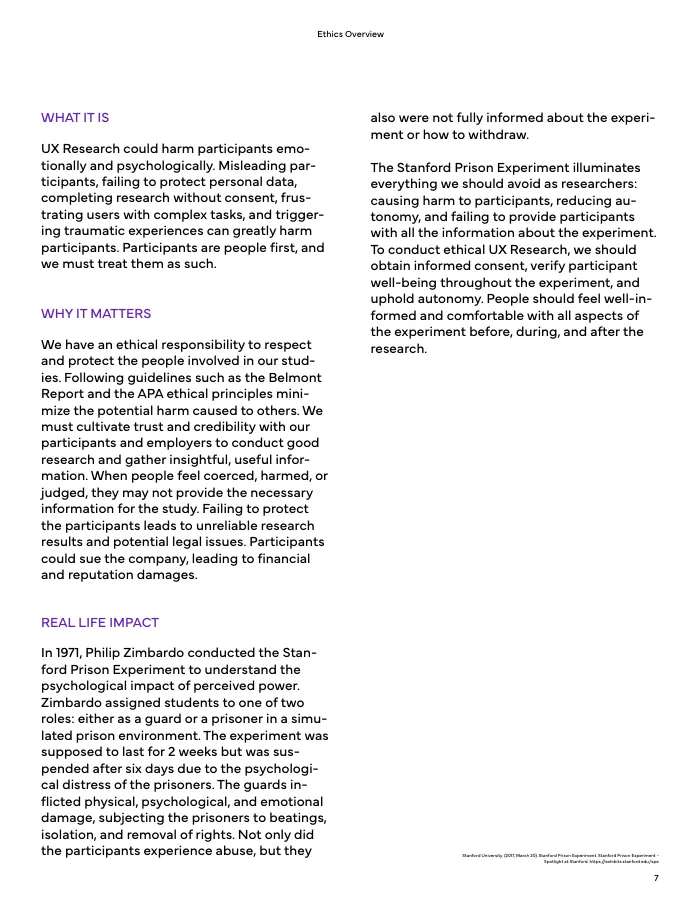
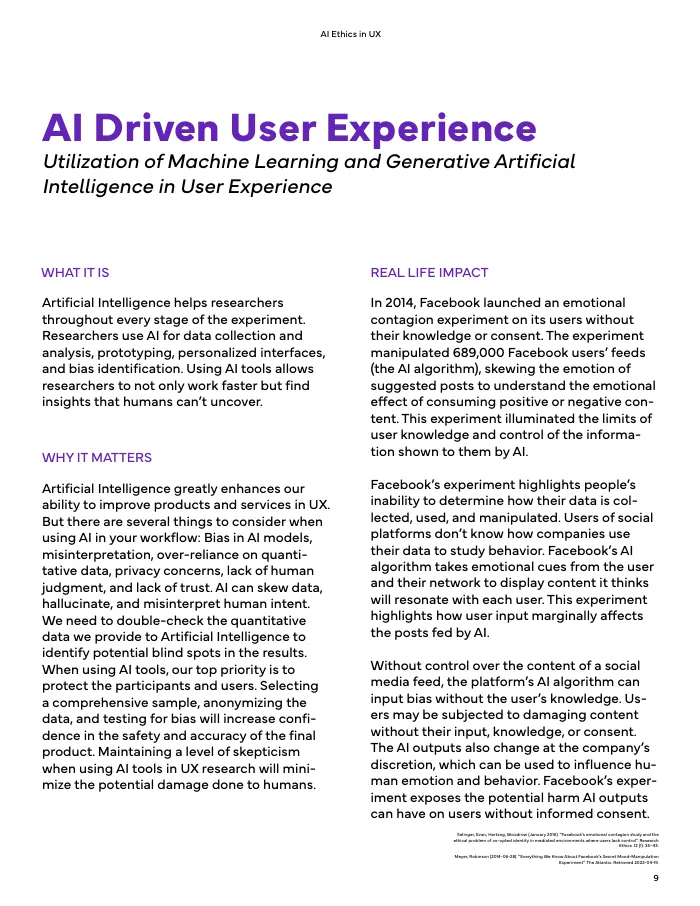
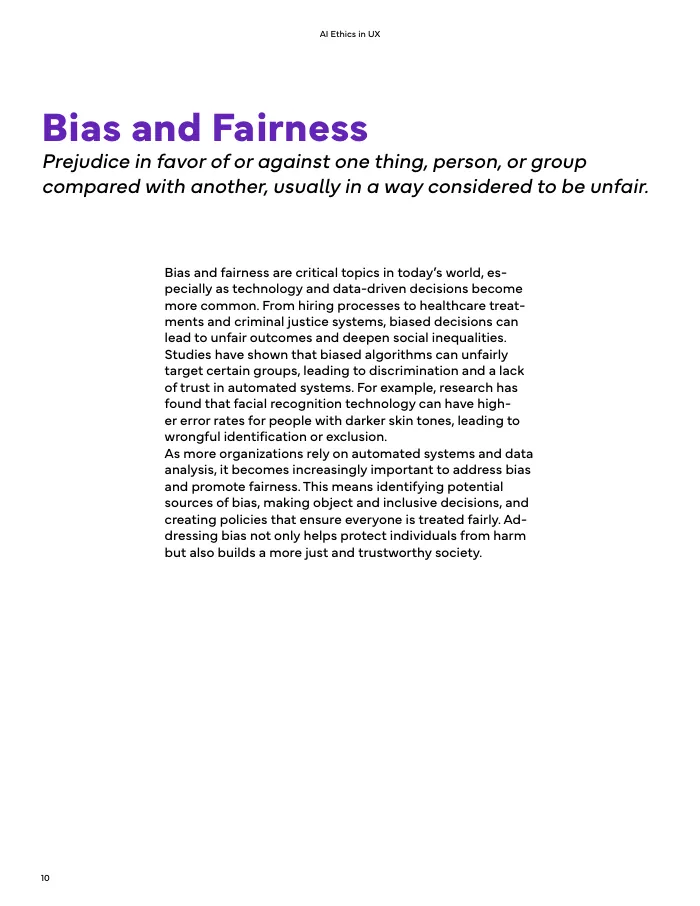
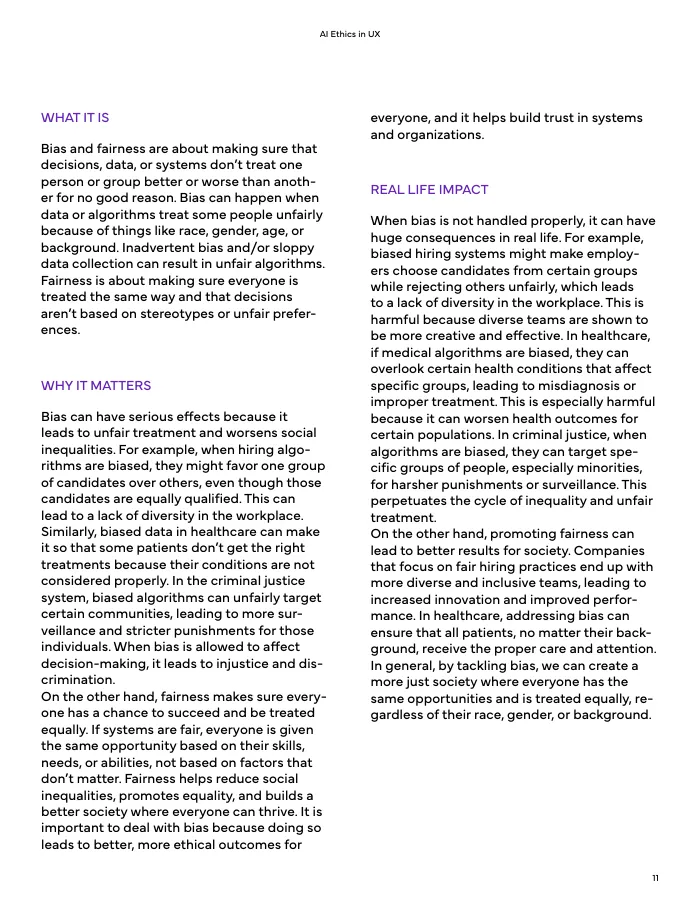
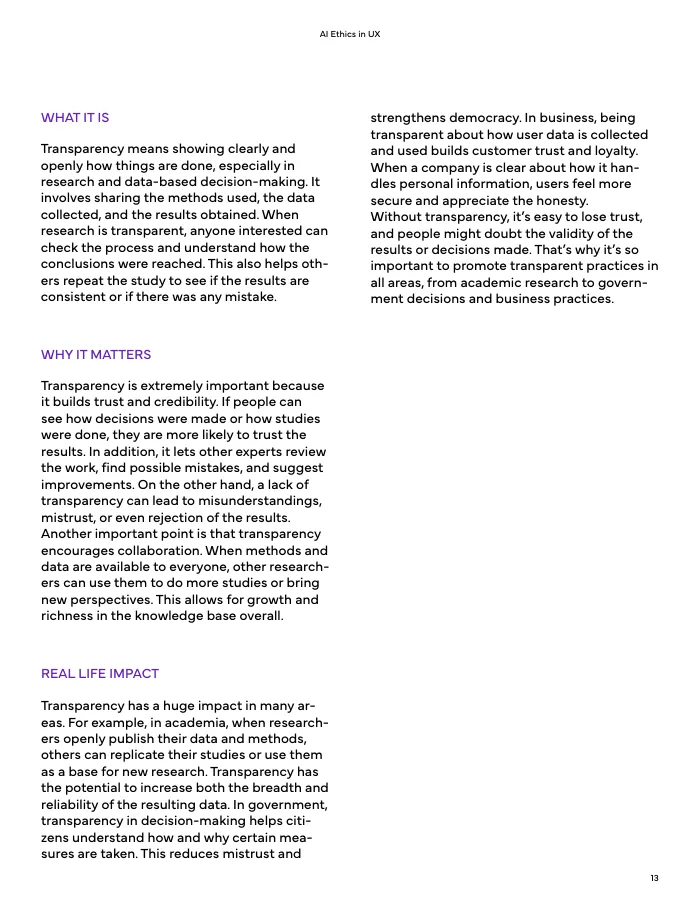
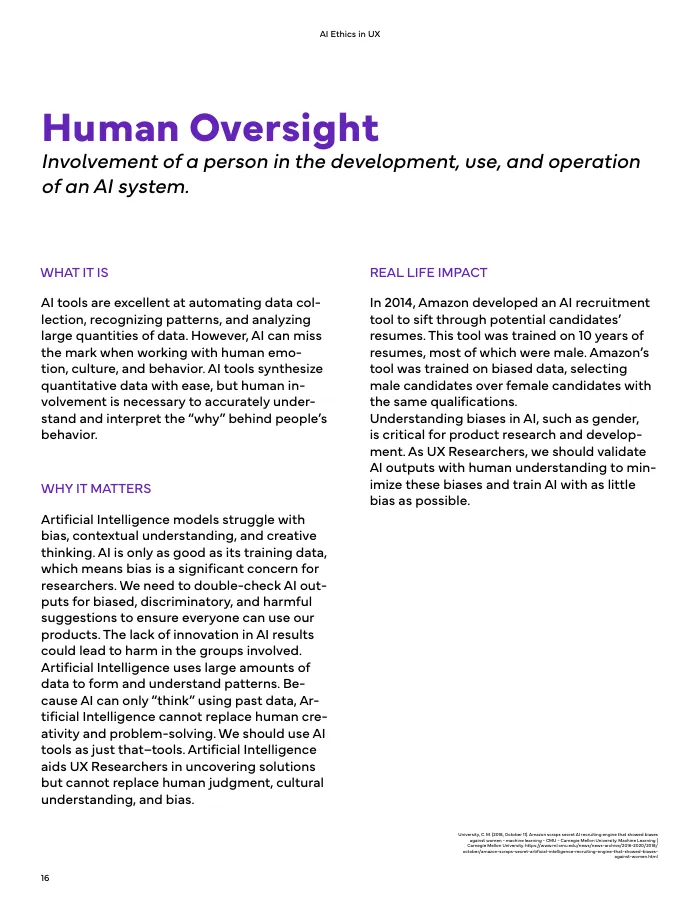
Each topic is taught the same way and ends on a real case where it went wrong: the Havasupai Tribe’s blood samples reused without consent, the Stanford Prison Experiment, Facebook changing the tone of 689,000 people’s feeds, Amazon’s recruiting tool picking men.
The point, in the book’s words: to “learn from the mistakes of harmful experiments.”
-
What AI adds · three asks
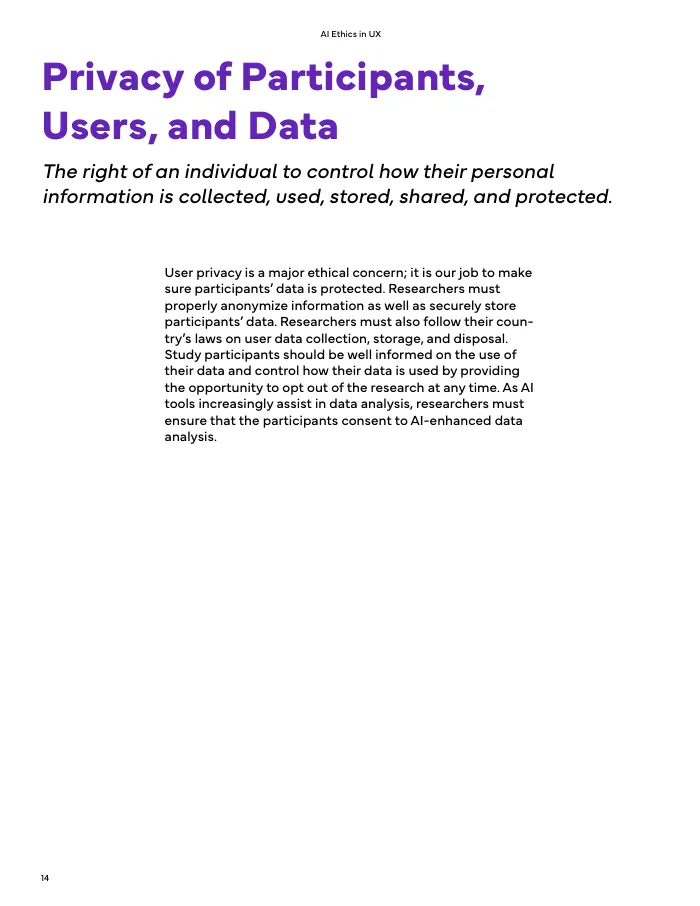
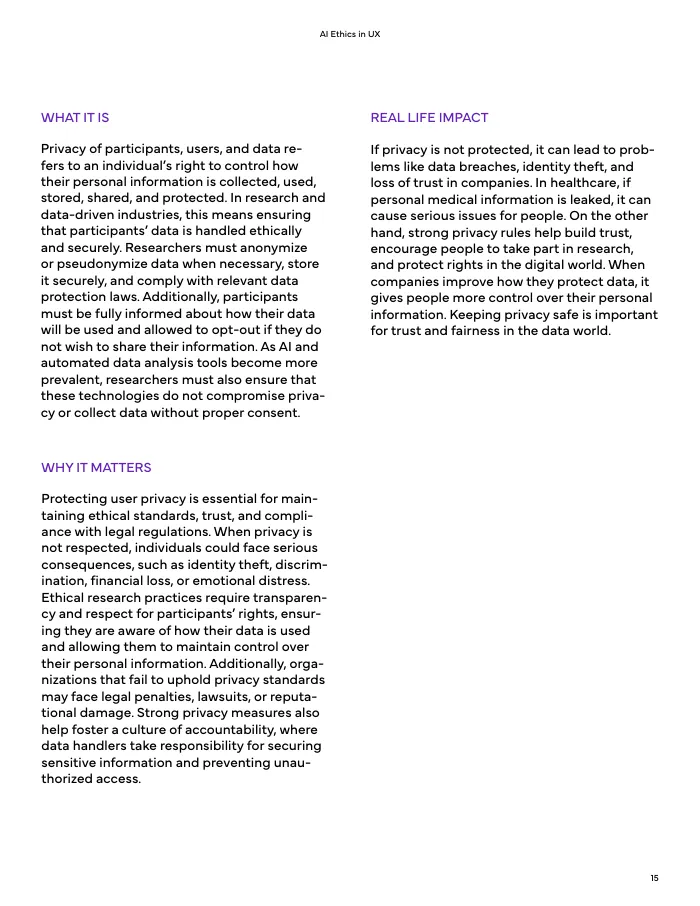
Tell participants when AI is involved. Get their consent to AI-enhanced analysis of their data. Have a person check what the AI produces, because “AI is only as good as its training data.”
Use AI, but “as just that–tools.”
-
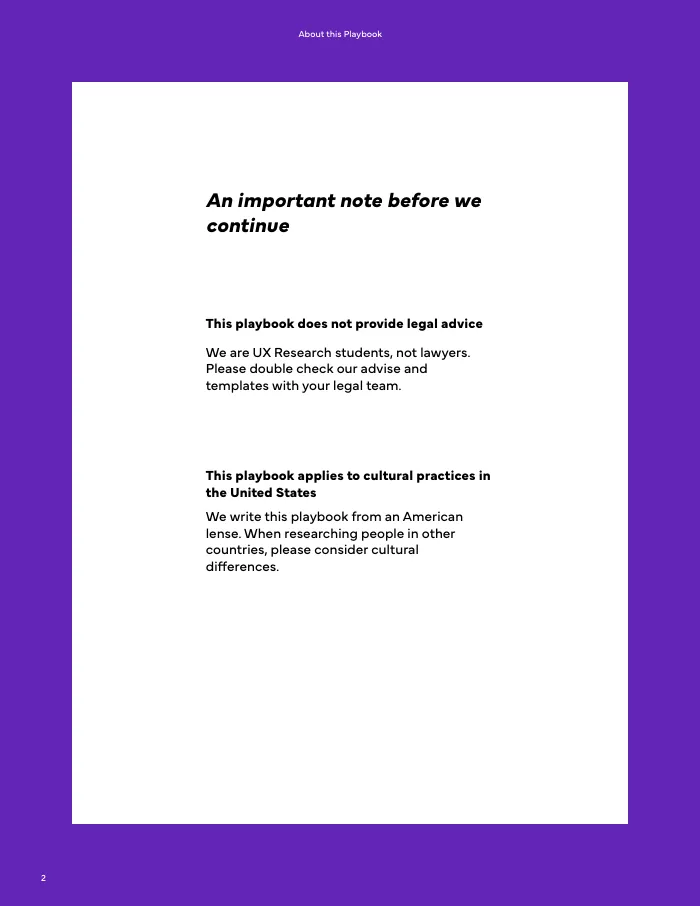
Its limits · students, not lawyers
It says so before the first chapter: it isn’t legal advice, readers should check it with their legal team, and it’s written from an American lens.
Saying what your advice can’t do is part of doing research ethically.
04
What we made
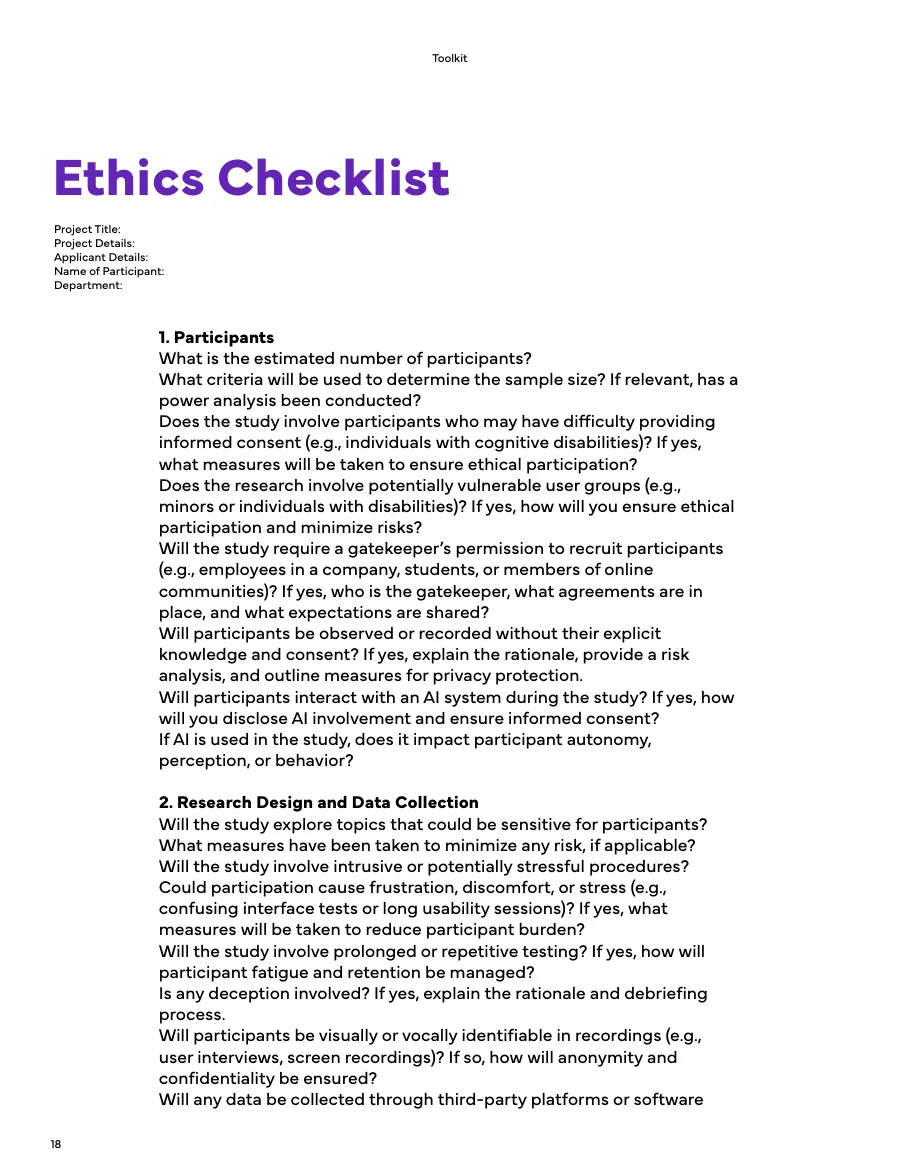
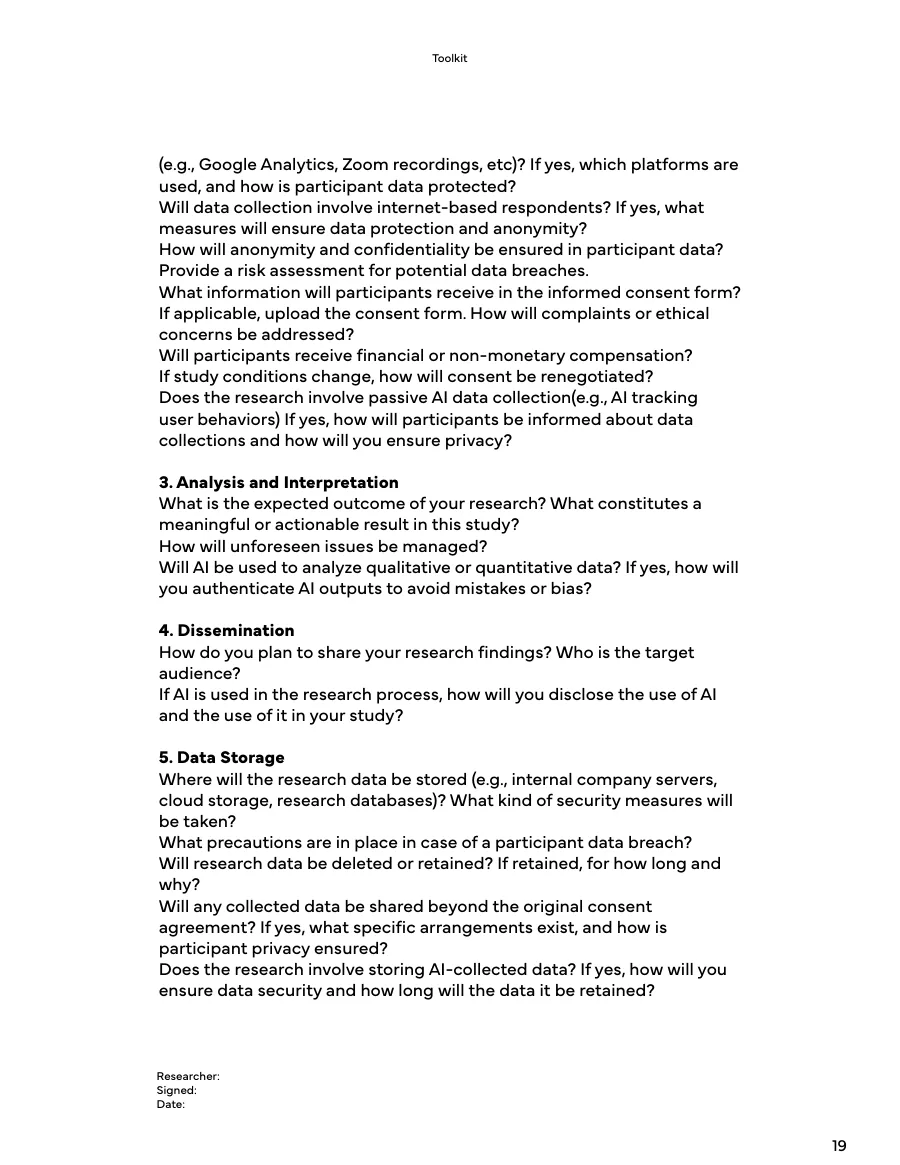
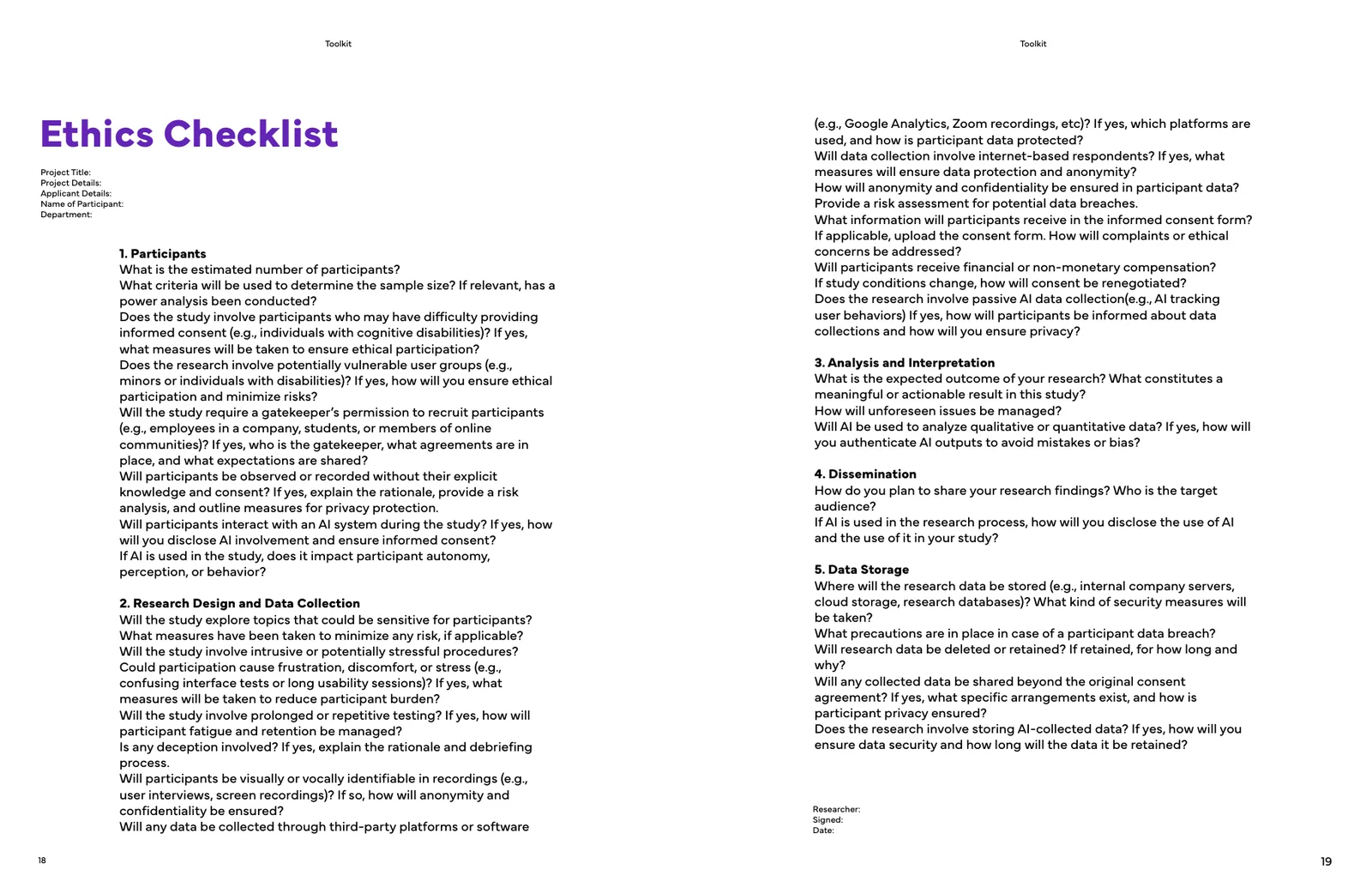
The toolkit turns the book into two documents a team can use. The ethics checklist runs in five sections: participants; research design and data collection; analysis and interpretation; dissemination; data storage. Every section asks how AI is involved and how participants will be told.
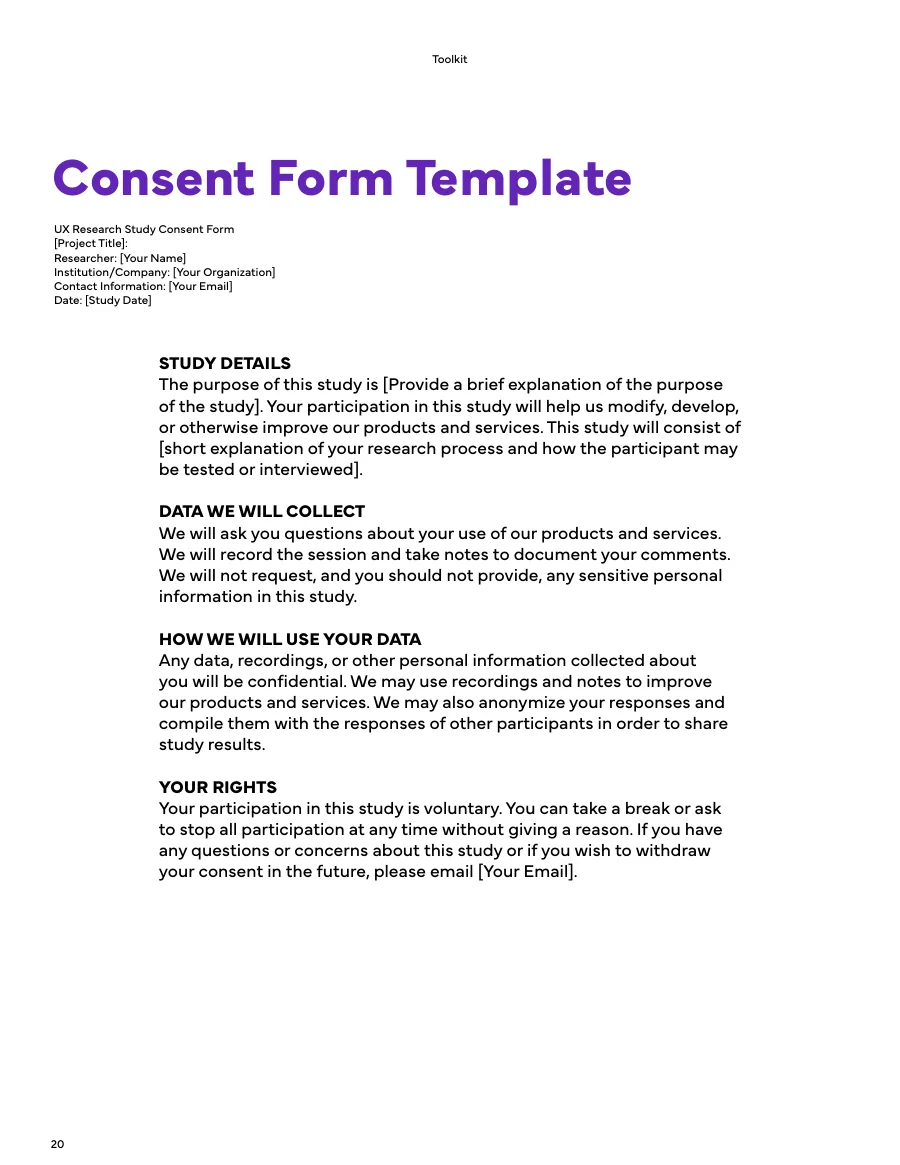
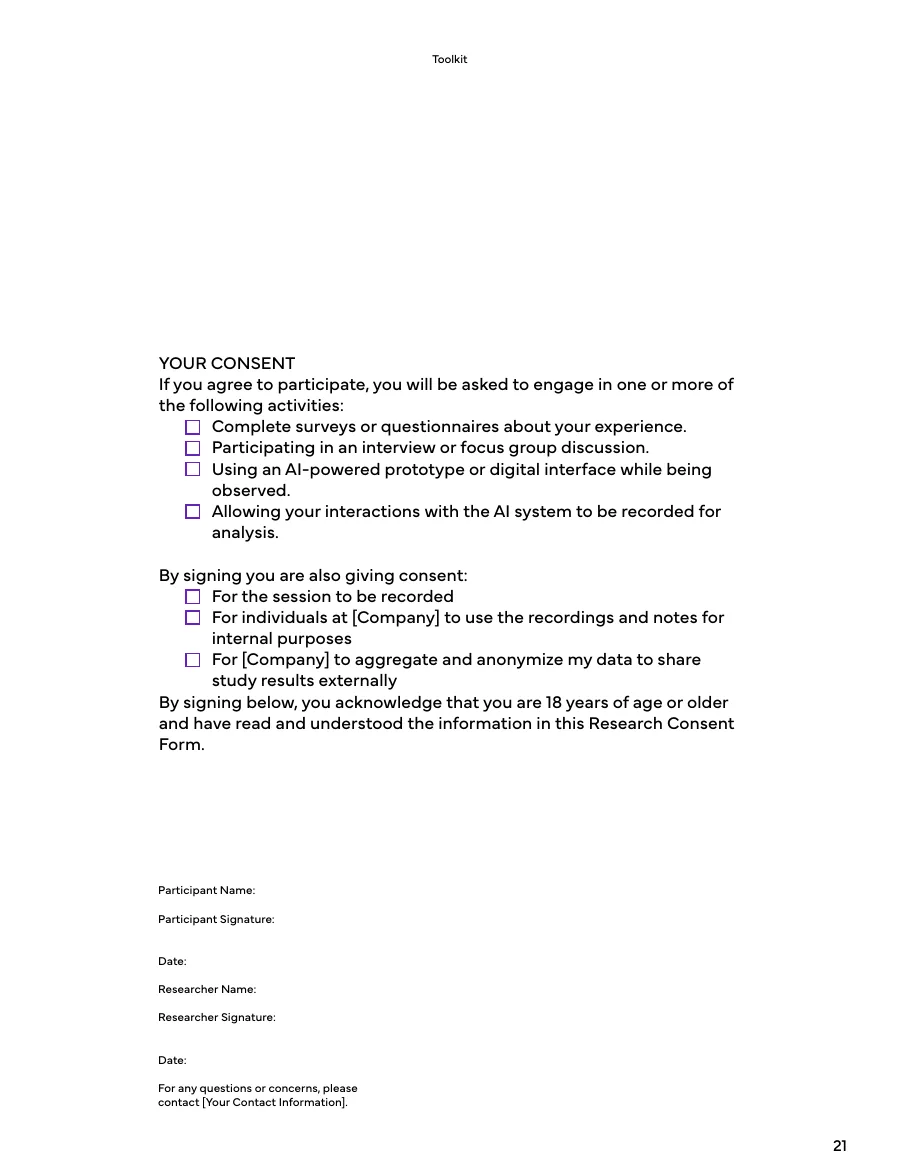
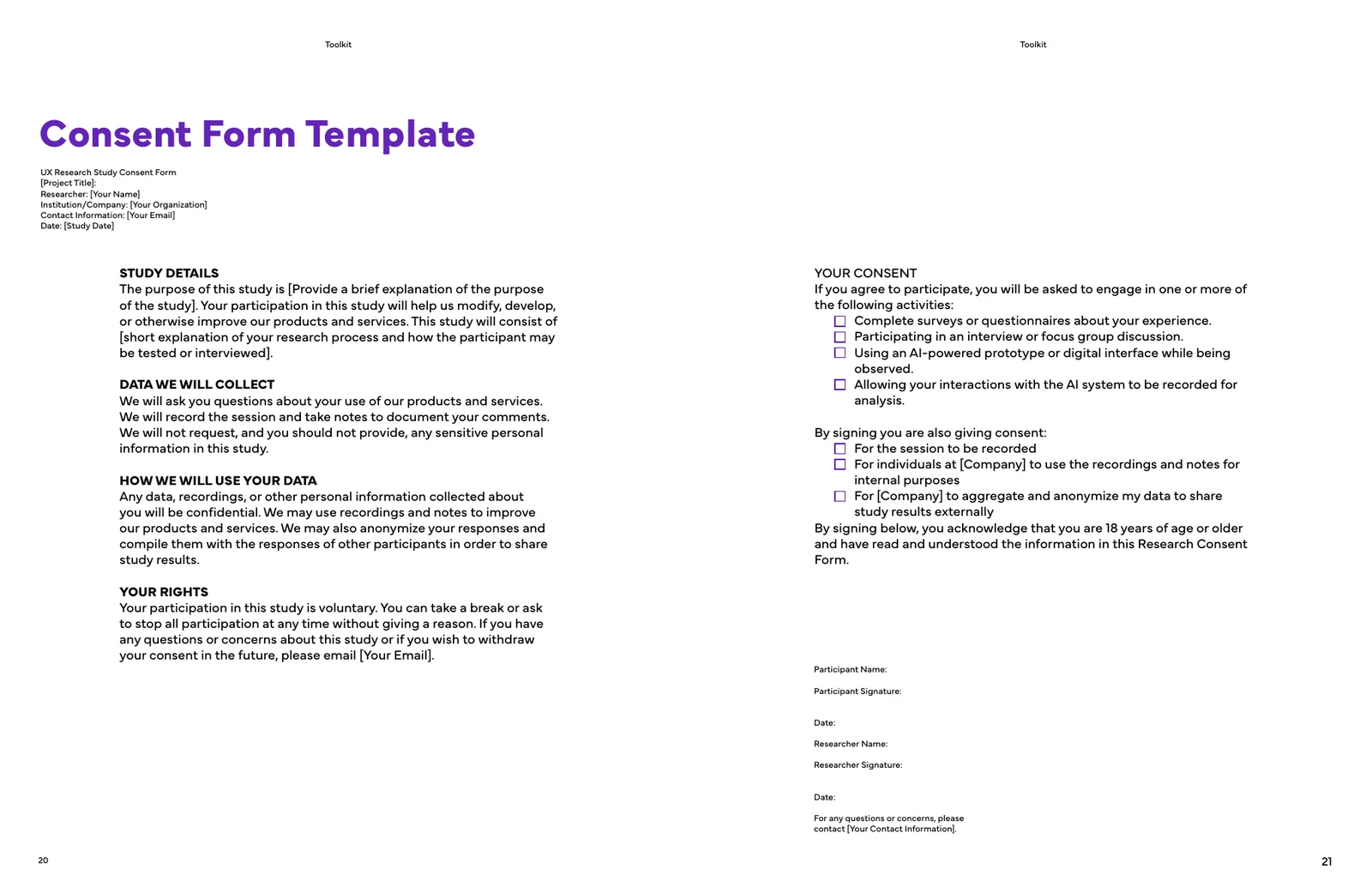
The consent form template is plain about AI: participants agree to use an AI-powered prototype and to have their AI interactions recorded, as separate lines they can see before they sign.
The template didn’t stay in class. It shaped the consent step in TreeTestAi, where every study opens with plain-language consent.
- 28
- Pages, from ethical foundations to the toolkit.
- 5 of 5
- Checklist sections that ask about AI.
- 2
- AI consents in the template, written out on their own lines.
05
Visuals
Student project for SCAD UXR 350, published by its authors under CC BY-NC-ND. Pages are shown as printed; the cover is redrawn without names.