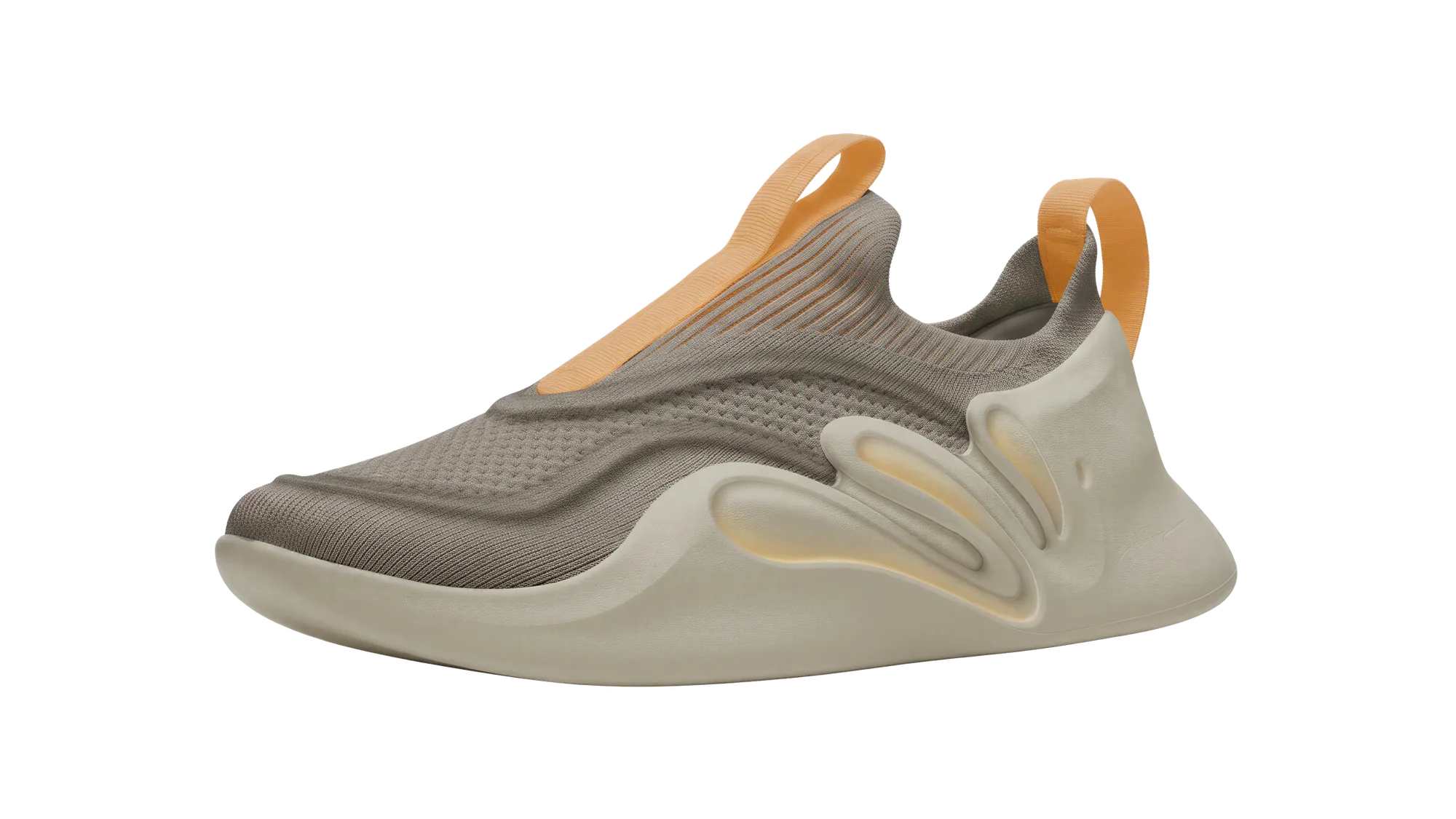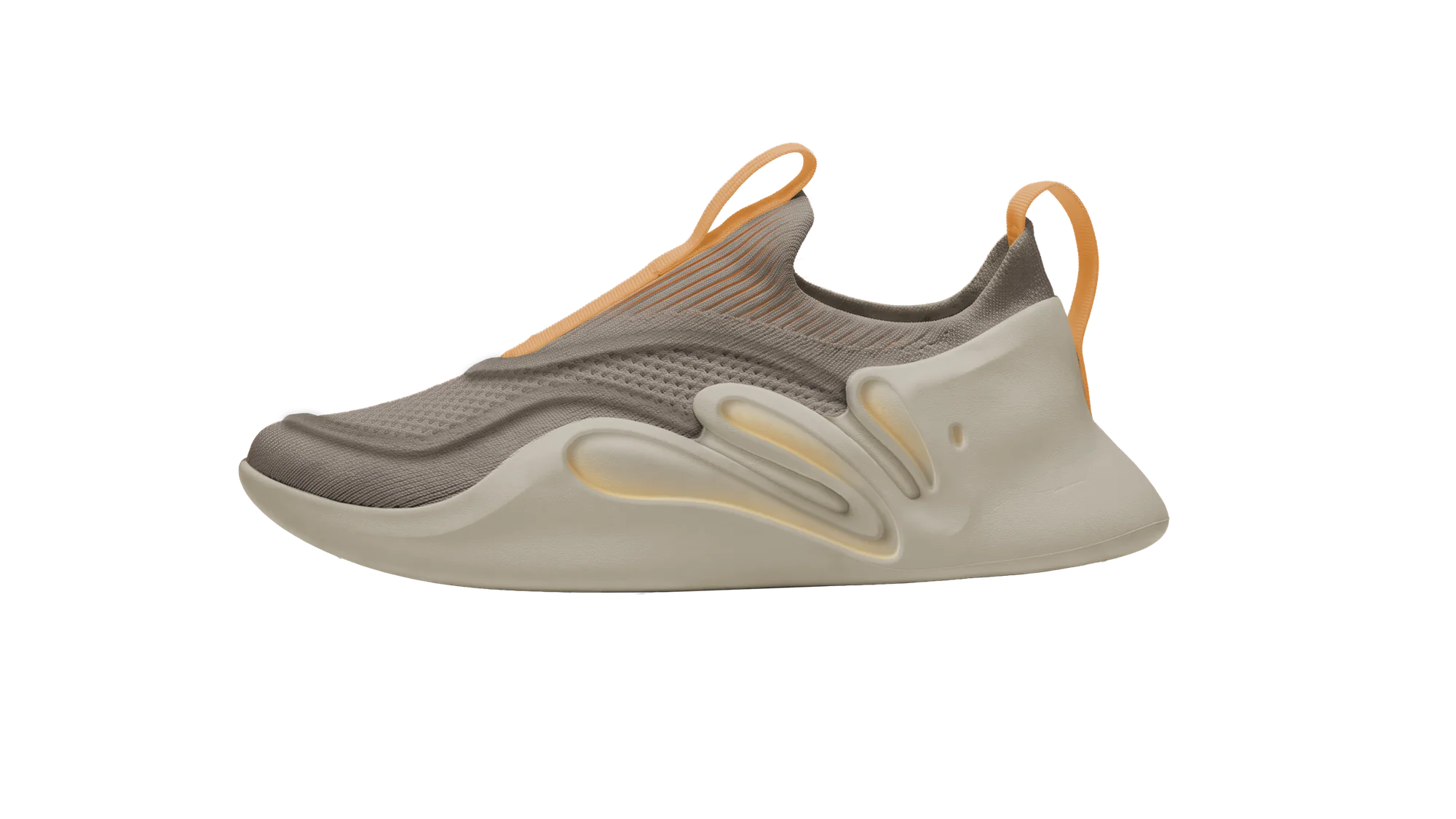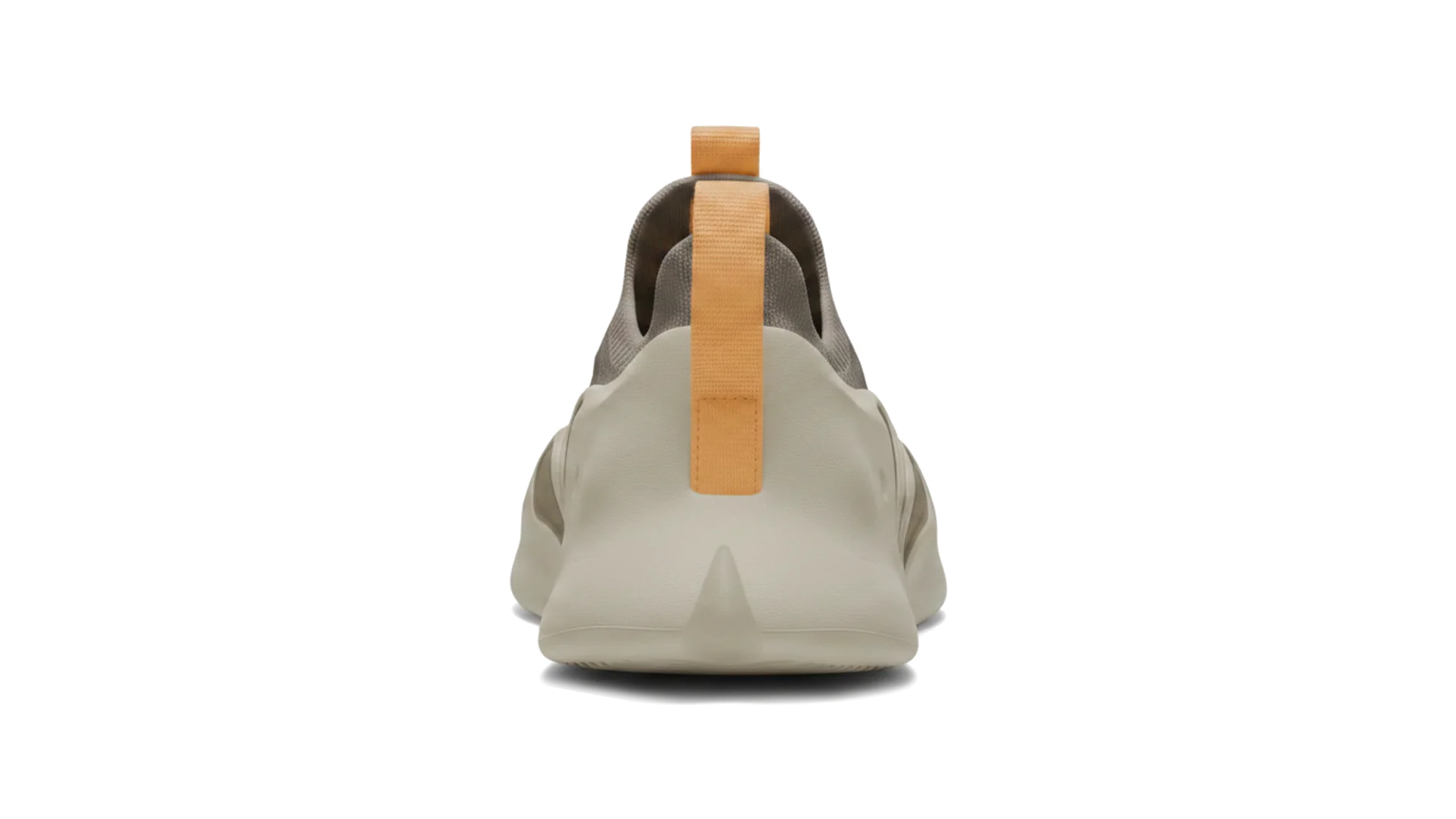
The AMBL shoe: a taupe knit slip-on upper with orange pull loops at the heel and instep, on a sculpted cream sole with wave-shaped pods along the side.

Skip the intro

AMBL · Smart shoe + companion app · 2026

A shoe for people with Parkinson’s, and the research behind what it tells them.

Shoe design + renders: Jose

Scroll

01 · Instep loop

No laces.

A loop lifts the instep open and lays it back down to close: a lockdown made for low motricity.

02 · Sole

A wide, grounded base.

Close to the ground and flat through the midfoot, with a subtle toe spring so it doesn’t catch.

03 · Heel tab

Big pull tabs.

Pronounced and easy to grab, for hands with limited motricity. The designer’s own brief.

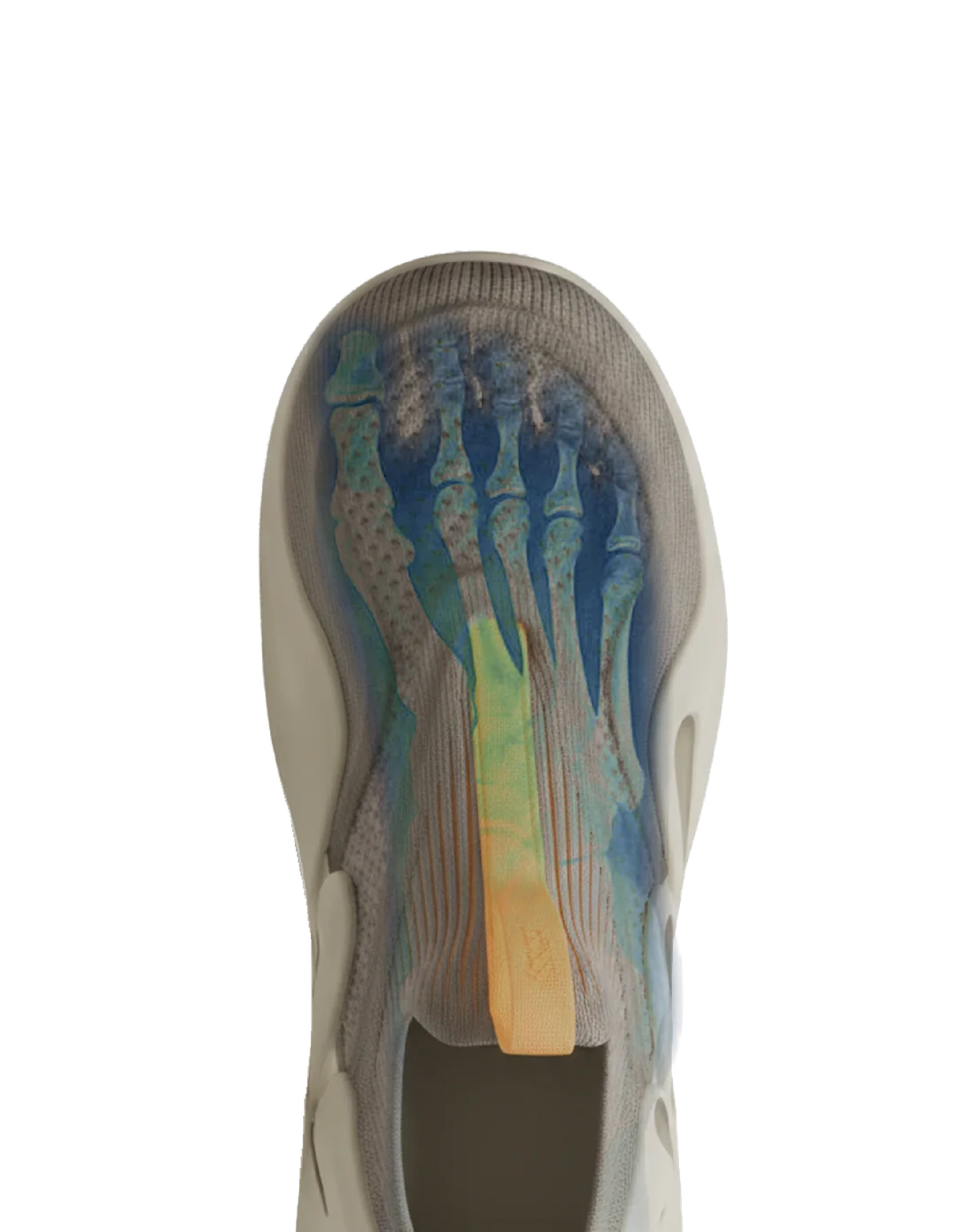
04 · Inside

What our prototype hid.

Nine pressure sensors underfoot, eight vibration motors along the walls, a motion sensor in the tongue. The concept calls for stimulation below what you can feel.

Inside the shoe

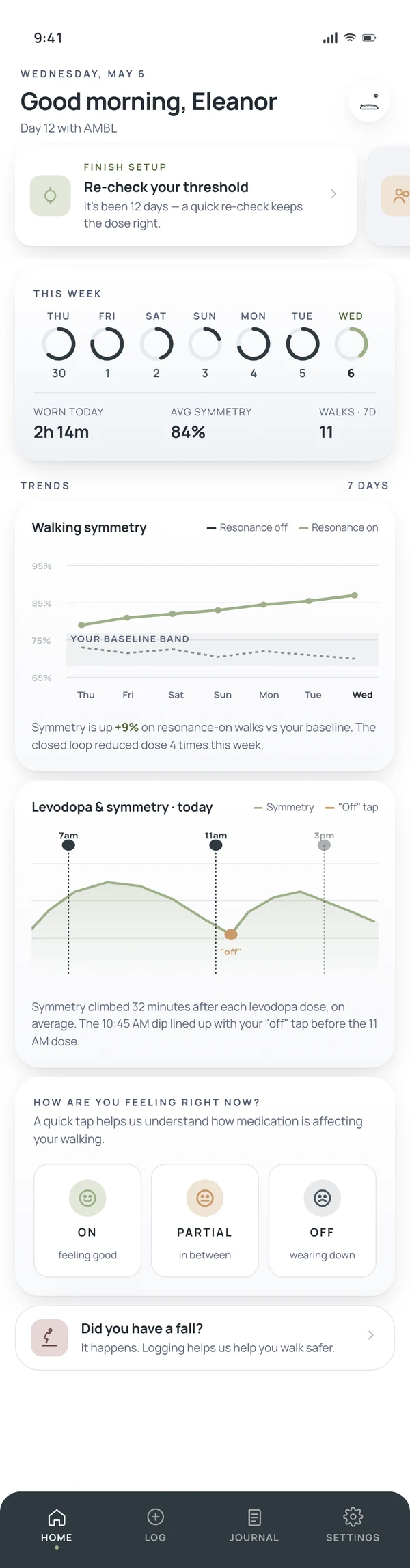
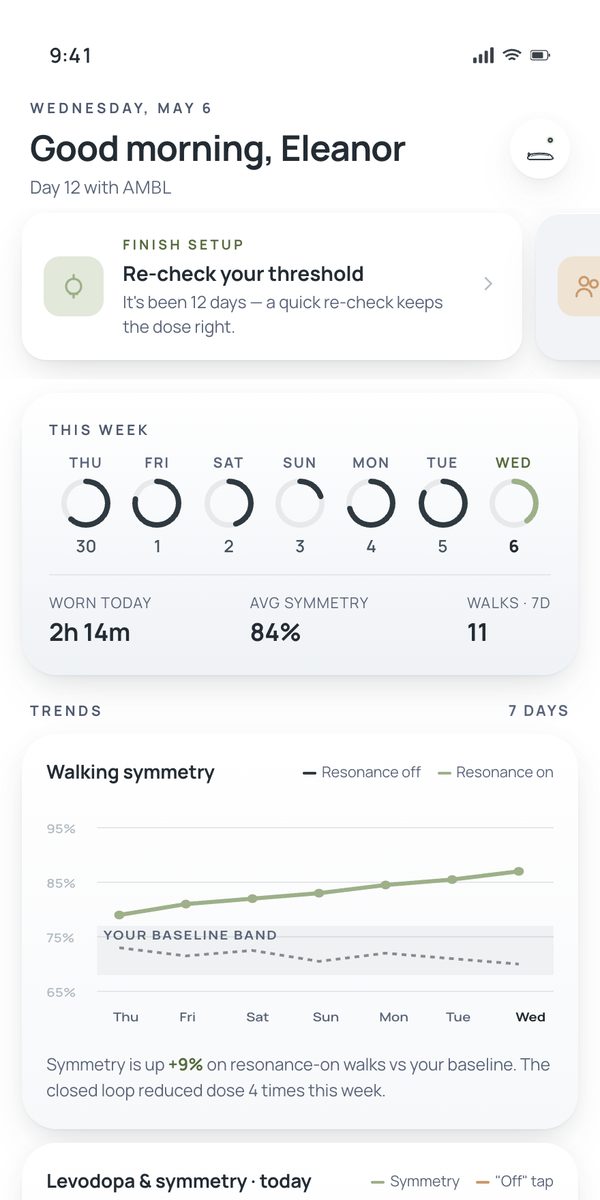
  1. Step in · the app, version 3

    Everything the shoes sense.

    Our early home led with rings, worn time, an average symmetry of 84% and two charts.

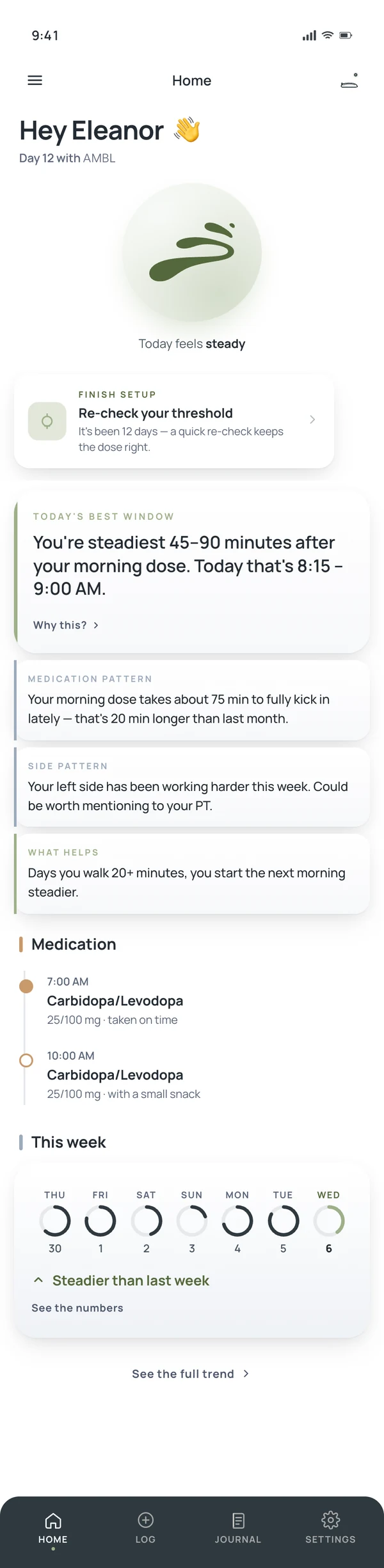
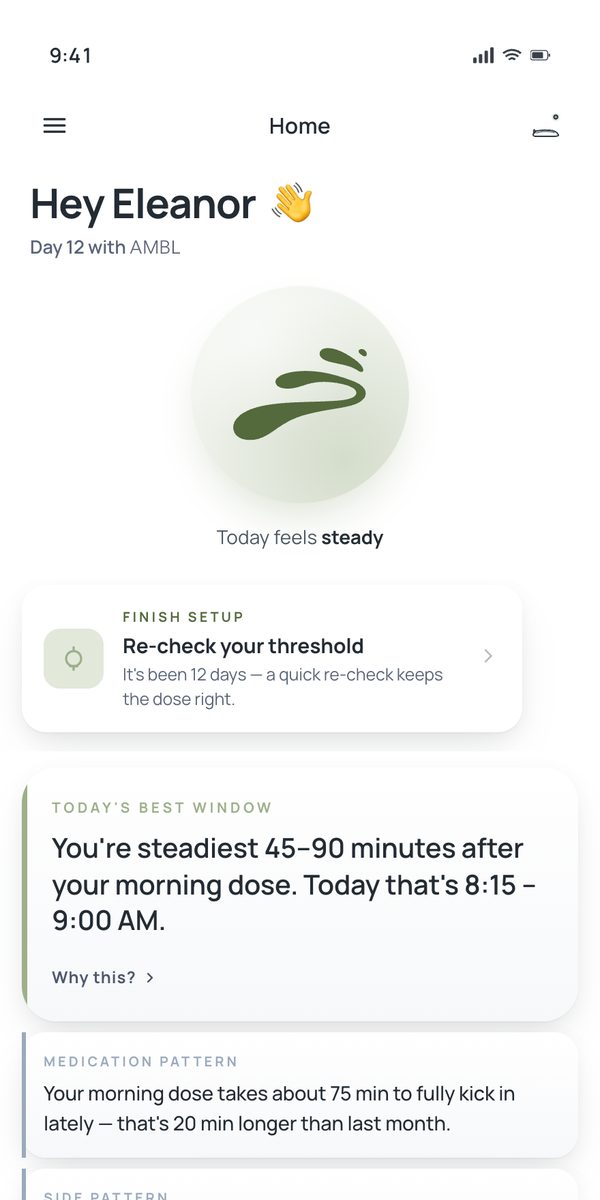
  2. Version 5

    So what, first.

    One sentence leads: “You’re steadiest 45–90 minutes after your morning dose.” The numbers moved one tap down.

  3. Final

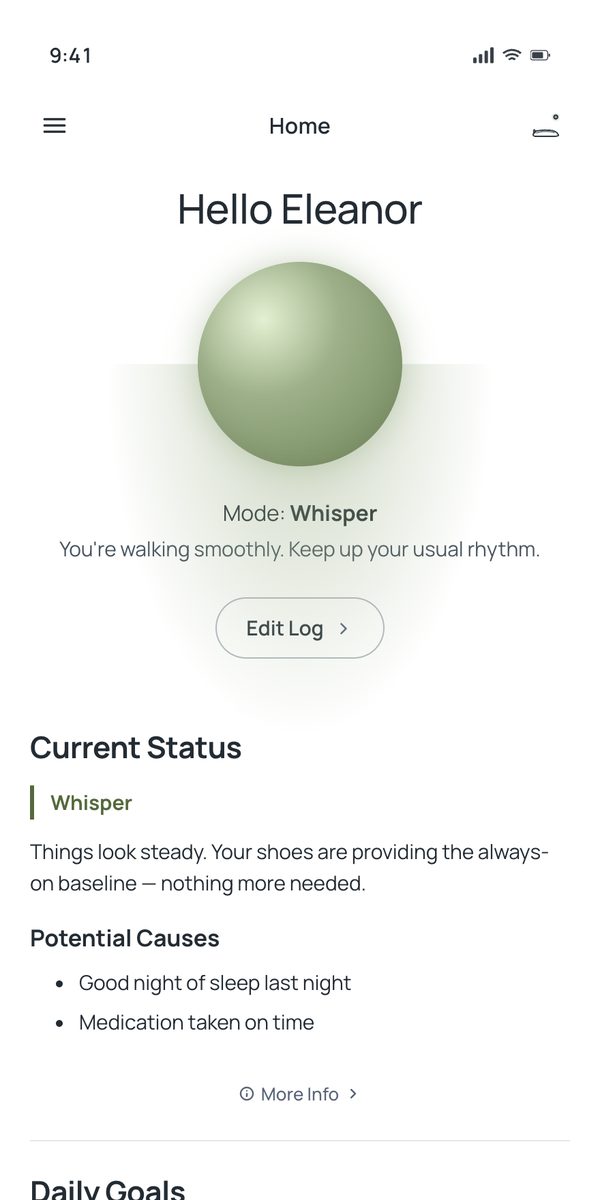
    The orb mirrors the shoes.

    One thing at a time, in the same four levels the shoes run in: Whisper, Nudge, Prompt, Alert.

  4. Whisper

    Steady, with a quiet baseline.

    Pressure rolls heel to toe. The stimulation is meant to stay below what you can feel, held inside each foot’s calibrated band.

  5. Drift

    One side starts doing less.

    Symmetry slips from 87% to 78% and steps get less even. The shoes pick the side from pressure, never from which hand shakes.

  6. Nudge

    The shoe responds, per foot.

    It steps up from Whisper to Nudge on the side that needs it, still inside the band, and the app says so in one line.

  7. Why

    Then it says why.

    About 90 minutes less sleep, medication 45 minutes late. Plain sentences, no chart.

  8. Steady again

    Back to Whisper.

    Symmetry recovers to 88% and the shoes ease back down on their own.

  9. Alert

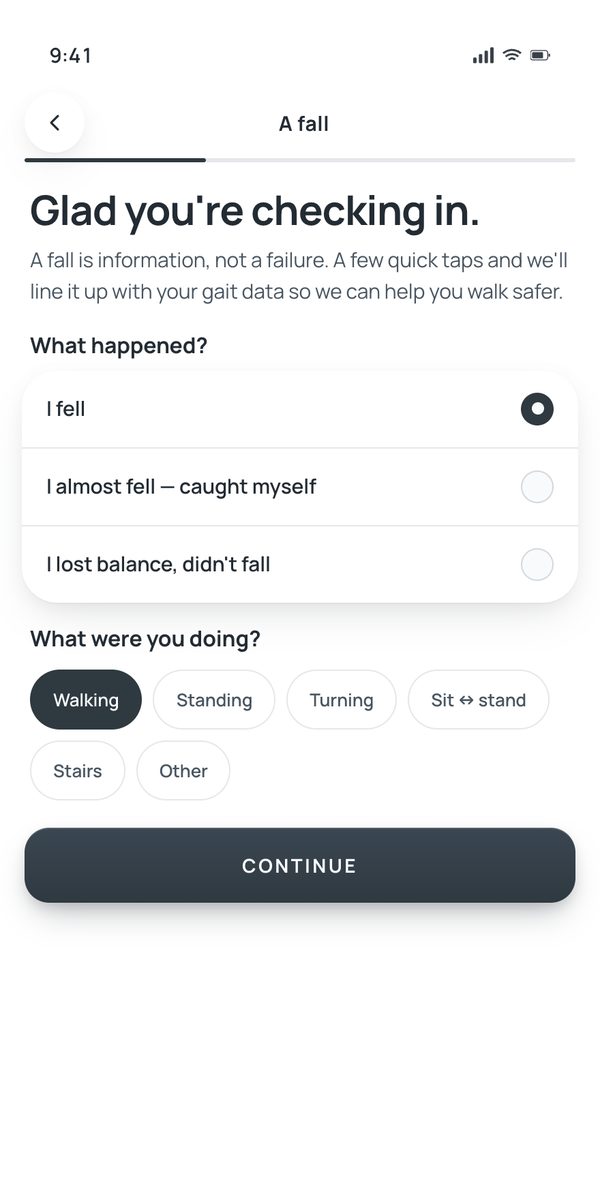
    “A fall is information, not a failure.”

    If they fall, the app asks once if they’re okay, logs what the shoes saw, and lets them choose whether to share it.

AMBL · Case study · 2026

A daily briefing, not a dashboard.

AMBL is a concept smart shoe for people with Parkinson’s. I led the research and designed the companion app that turns what the shoes sense into plain-language verdicts.

Role
Research & digital product lead
Timeline
Spring 2026, March to May · SCAD UXD 340
Team
Bess, Alyssa, Jose (shoe design) and me
Methods
Research brief (8 studies and preprints), competitive teardown, 5 tests of the shoe prototype, app prototypes v1 to final

01

What it is

AMBL is two things designed together: a smart shoe and its companion app. Balance is one of the hardest Parkinson’s symptoms to treat: postural instability doesn’t respond well to medication. Symptoms change by the hour. Between visits, tracking the disease is theirs to do alone.

The apps that exist watch and report, so a clinician can review later. I wanted something “proactive rather than someone checking data and then reacting.” The hardware idea was stochastic resonance: a little random noise at the sole of the foot, which research suggests can help weak sensory signals register. The catch is that it only helps at the right dose, on the right foot. AMBL is a concept, not a cleared medical device.

02

My part

I started with the science, because here a wrong call makes the product harmful, not just bad. I directed a research brief across 8 studies and preprints and turned it into five rules the design couldn’t break:

  • Real random noise, never a regular vibration pattern.
  • A dose held between 25 and 90% of each foot’s measured threshold, with no “turn it up” slider.
  • Choose the foot from pressure data, never from hand tremor.
  • Back off automatically if walking gets worse.
  • Gate onboarding on a measurable deficit.

Then I tore down StrivePD, the leading patient-facing Parkinson’s app, across 38 screens. I kept its honest empty states and dropped its log-first home. I built the app prototype from version 1 to the final, and handed it off to the team.

We contacted 100+ clinics, hospitals and care facilities to reach people with Parkinson’s, and none landed. So anything clinical had to trace to the brief.

03

What we found

  • Literature · Alsaqabi 2025, under review · 14 people with early-stage Parkinson’s

    Stimulation increased sway on the more-affected side (p = 0.027). That side had been picked from hand tremor.

    The app never asks which hand shakes more. The shoes pick the foot from pressure data and back off when walking gets worse.

  • Concept test · early app

    There’s a lot of data, but I don’t know what to do with it.

    The home screen was showing raw inputs. People needed the conclusion.

  • Shoe prototype test · 5 testers · observed

    4 of 5 felt distinct intensity levels across the insole zones, and testers independently described the motion response as “balance” or “imbalance” detection.

    The feedback already carried meaning, so the app’s job was to name what people felt, not explain it with numbers.

04

What changed

I flipped the home screen from a dashboard to a daily briefing. The old home led with “Avg symmetry 84%” and two charts. Version 5 led with one sentence; the final went further, to one orb that mirrors the shoes and one thing at a time. The engine won’t claim a pattern without enough data, and a quiet day says it’s quiet. Falls are one tap away but never loud, and sharing with a care partner is the patient’s choice.

8 → 5
Studies and preprints in the research brief, turned into five rules the design couldn’t break.
38
StrivePD screens torn down: its honest empty states stayed, its log-first home went.
4 of 5
Testers felt distinct intensity levels across the insole zones of the shoe prototype.

05

Visuals
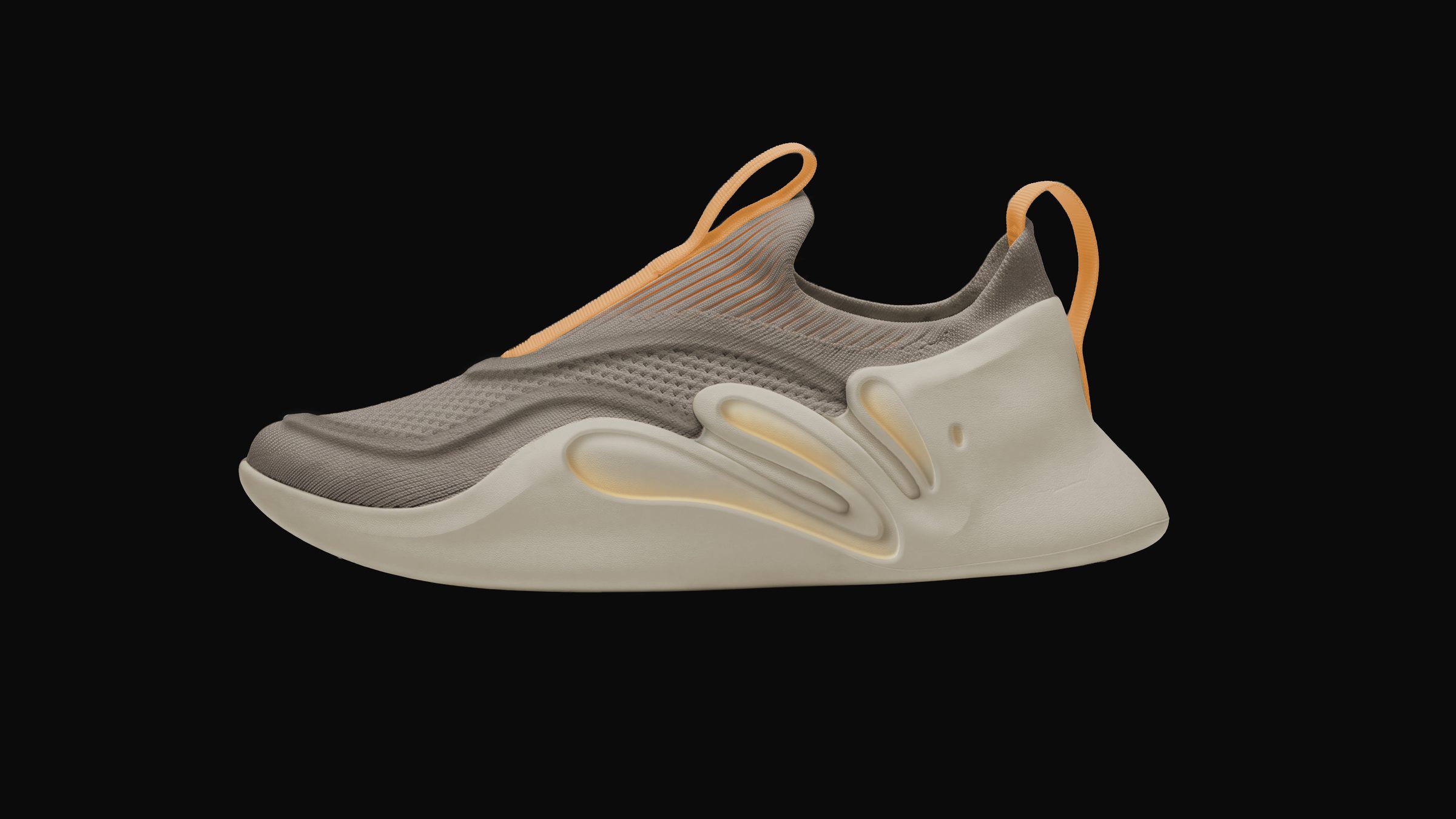
Side view of the AMBL shoe: a taupe knit slip-on upper with orange pull loops at the heel and tongue, on a sculpted cream sole with a wave-shaped side panel.
No laces, big pull tabs, and a wide, grounded base.
Version 3 home screen: a week of activity rings, worn time 2h 14m, average symmetry 84%, and a walking-symmetry line chart.
Before (v3). Everything the shoes measured, shown raw.
Version 5 home screen: “Hey Eleanor”, then a card reading “You’re steadiest 45–90 minutes after your morning dose. Today that’s 8:15 – 9:00 AM.” above smaller insight cards.
After (v5). The same data, now in sentences: when you’re steadiest, and why.
Final home screen: “Hello Eleanor”, a soft green sphere labeled Mode: Whisper, and a Current Status section reading “Things look steady”.
Final. The orb mirrors what the shoes are doing, from Whisper to Alert.
Fall report, step 1: “Glad you’re checking in.” with choices for fell, almost fell, or lost balance, and activity chips like Walking and Turning.
“A fall is information, not a failure.” A few taps, lined up with the gait data.

Shoe design and renders: Jose. App screens: my prototype. Eleanor is the app’s demo persona, and her data is illustrative.